Brown recluse
Most bites heal without trouble; a few cause a slow-healing wound. Many wounds blamed on recluses outside their range turn out to be other conditions.
- Lives in
- 16 states
- Size
- 0.25–0.5 in
- Open US records
- 1,363
- Group
- Spider
How to identify it
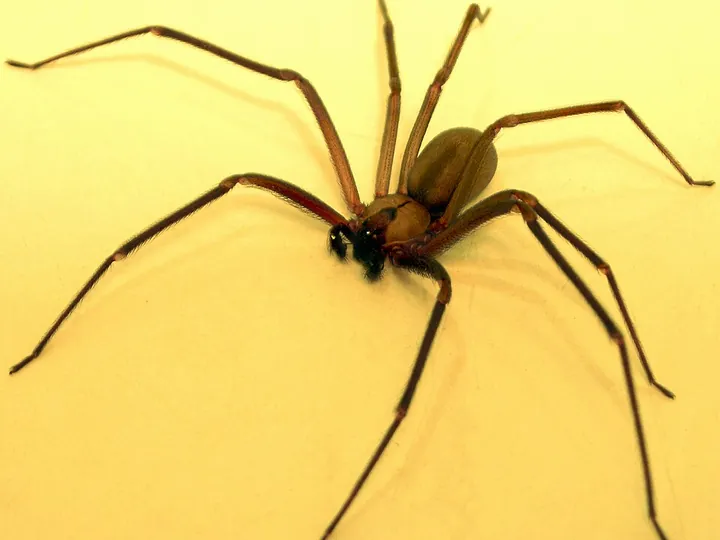
- Dark violin shape on the back, neck of the violin points to the rear
- Six eyes in three pairs (most spiders have eight)
- Plain tan abdomen and legs with no bands or spines
- Long thin legs; with legs spread it is about the size of a quarter
Size: 0.25–0.5 in (body length). Habitat: Indoors in boxes, closets, attics and basements; outdoors under rocks and bark.
Also called fiddleback spider, violin spider.
Where it lives
- Lives here
- Rare records
- Gone
- Not here
When it is out
Look-alikes
- Brown Recluse vs Wolf Spider Wolf spider: harmless
- Brown Recluse vs Hobo Spider Hobo spider: harmless
- Brown Recluse vs Cellar Spider Cellar spider: harmless
- Brown Recluse vs Southern House Spider Southern house spider: harmless
State by state
| State | Status | Open records | Counties |
|---|---|---|---|
| Illinois | Lives here | 407 | 53 |
| Missouri | Lives here | 196 | 26 |
| Oklahoma | Lives here | 160 | 27 |
| Indiana | Lives here | 147 | 10 |
| Texas | Lives here | 130 | 44 |
| Kansas | Lives here | 92 | 16 |
| Arkansas | Lives here | 48 | 13 |
| Tennessee | Lives here | 47 | 10 |
| Kentucky | Lives here | 26 | 16 |
| Alabama | Lives here | 24 | 7 |
| Nebraska | Lives here | 15 | 3 |
| Georgia | Lives here | 8 | 3 |
| Mississippi | Lives here | 7 | 5 |
| Iowa | Lives here | 4 | 2 |
| Ohio | Lives here | 4 | 3 |
| Louisiana | Lives here | 1 | 1 |
| Virginia | Rare records | 30 | 2 |
| Maryland | Rare records | 8 | 2 |
| New Mexico | Rare records | 2 | 1 |
| Michigan | Rare records | 1 | 1 |
| North Carolina | Rare records | 1 | 1 |
| Wisconsin | Rare records | 1 | 1 |
| Arizona | Not here | 2 | 1 |
| California | Not here | 1 | 1 |
| New York | Not here | 1 | 1 |
States not listed have no open records and are outside the range.
Questions
Where does the brown recluse live?
In 16 states: Alabama, Arkansas, Georgia, Illinois, Indiana, Iowa, Kansas, Kentucky, Louisiana, Mississippi, Missouri, Nebraska, Ohio, Oklahoma, Tennessee and Texas. Rare records also come from Maryland, Michigan, New Mexico, North Carolina, Virginia and Wisconsin.
Is the brown recluse dangerous?
Medically significant. Most bites heal without trouble; a few cause a slow-healing wound. Many wounds blamed on recluses outside their range turn out to be other conditions.
How do you identify a brown recluse?
Dark violin shape on the back, neck of the violin points to the rear. Six eyes in three pairs (most spiders have eight). Plain tan abdomen and legs with no bands or spines.
When is the brown recluse most active?
Most open US records fall in May to August.