Gila monster
Venomous · Heloderma suspectum
Medically significantNeeds medical care
Bites are rare, painful and happen almost only when people handle the lizard. Protected by Arizona law.
- Lives in
- 4 states
- Size
- 12–22 in
- Open US records
- 1,344
- Group
- Lizard
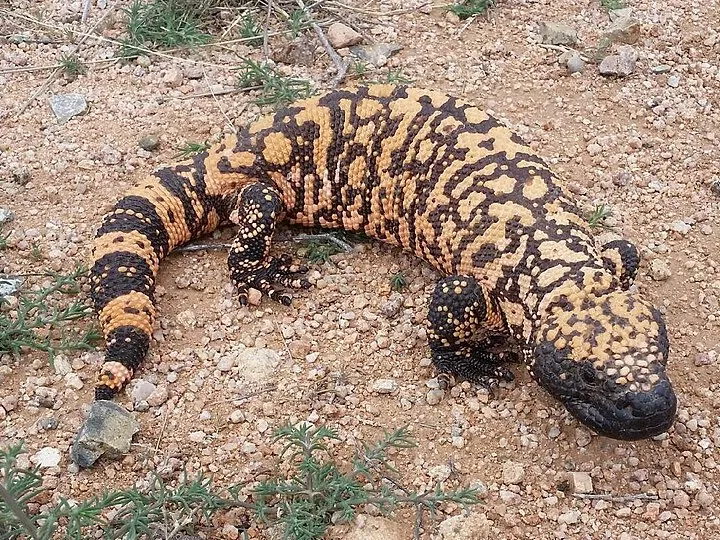
How to identify it
- Heavy lizard with bead-like scales
- Black with pink, orange or yellow blotches or bands
- Short fat tail that stores fat
- Slow walk
Size: 12–22 in (total length). Habitat: Desert scrub and rocky foothills; spends most of the year underground.
Where it lives
- Lives here
- Rare records
- Gone
- Not here
When it is out
State by state
| State | Status | Open records | Counties |
|---|---|---|---|
| Arizona | Lives here | 1,257 | 13 |
| New Mexico | Lives here | 26 | 2 |
| Nevada | Lives here | 24 | 3 |
| Utah | Lives here | 21 | 1 |
| California | Rare records | 6 | 2 |
| Washington | Rare records | 6 | 1 |
| Texas | Rare records | 3 | 1 |
| Kansas | Not here | 1 | 1 |
States not listed have no open records and are outside the range.
Questions
Where does the Gila monster live?
In 4 states: Arizona, Nevada, New Mexico and Utah. Rare records also come from California, Texas and Washington.
Is the Gila monster dangerous?
Medically significant. Bites are rare, painful and happen almost only when people handle the lizard. Protected by Arizona law.
How do you identify a Gila monster?
Heavy lizard with bead-like scales. Black with pink, orange or yellow blotches or bands. Short fat tail that stores fat.
When is the Gila monster most active?
Most open US records fall in April to May, August.