Sidewinder
Venomous · Crotalus cerastes
DangerousA bite is a medical emergency
Small, with a smaller venom yield than big rattlesnakes, but a bite still needs emergency care.
- Lives in
- 4 states
- Size
- 17–30 in
- Open US records
- 5,889
- Group
- Snake
How to identify it
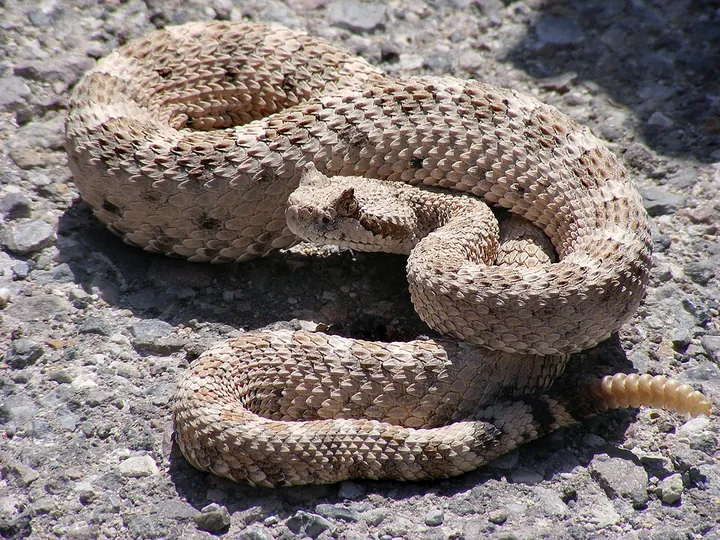
- Small rattlesnake with a raised horn-like scale over each eye
- Pale sand color with faint blotches
- Moves sideways and leaves J-shaped tracks
- Rattle on the tail
Size: 17–30 in (total length). Habitat: Sand dunes and sandy desert flats.
Also called horned rattlesnake.
Where it lives
- Lives here
- Rare records
- Gone
- Not here
When it is out
State by state
| State | Status | Open records | Counties |
|---|---|---|---|
| California | Lives here | 3,983 | 8 |
| Arizona | Lives here | 1,442 | 11 |
| Nevada | Lives here | 430 | 4 |
| Utah | Lives here | 30 | 1 |
| Texas | Not here | 2 | 0 |
| Kansas | Not here | 1 | 1 |
| Minnesota | Not here | 1 | 1 |
States not listed have no open records and are outside the range.
Questions
Where does the sidewinder live?
In 4 states: Arizona, California, Nevada and Utah.
Is the sidewinder dangerous?
Dangerous. Small, with a smaller venom yield than big rattlesnakes, but a bite still needs emergency care.
How do you identify a sidewinder?
Small rattlesnake with a raised horn-like scale over each eye. Pale sand color with faint blotches. Moves sideways and leaves J-shaped tracks.
When is the sidewinder most active?
Most open US records fall in April to June.