Arizona bark scorpion
Venomous · Centruroides sculpturatus
Medically significantNeeds medical care
The only US scorpion with a sting that is medically significant. Young children and older adults are at most risk.
- Lives in
- 5 states
- Size
- 2–3 in
- Open US records
- 340
- Group
- Scorpion
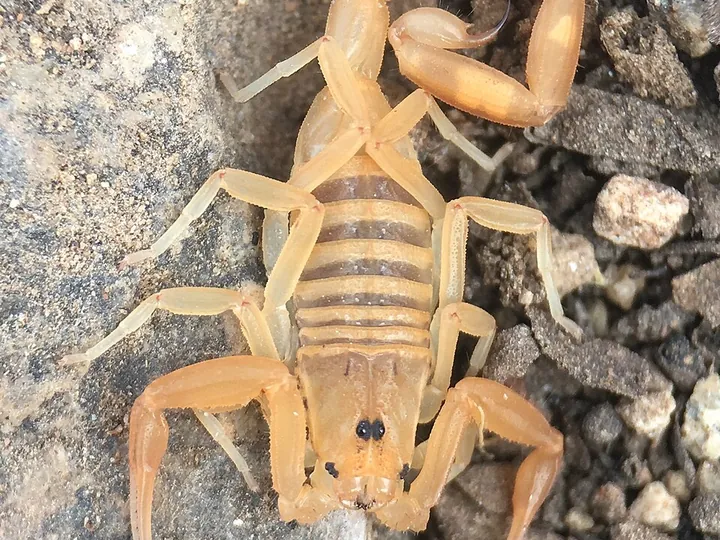
How to identify it
- Slim, pale yellow to tan scorpion with thin pincers
- Long thin tail, often curled to the side when resting
- Climbs walls and ceilings
- Glows under UV light, like other scorpions
Size: 2–3 in (length). Habitat: Desert scrub and city yards; often comes indoors.
Also called bark scorpion.
Where it lives
- Lives here
- Rare records
- Gone
- Not here
When it is out
Look-alikes
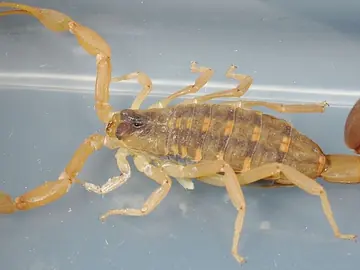
- Bark Scorpion vs Desert Hairy Scorpion Giant desert hairy scorpion: painful, rarely serious
State by state
| State | Status | Open records | Counties |
|---|---|---|---|
| Arizona | Lives here | 306 | 12 |
| Nevada | Lives here | 17 | 2 |
| New Mexico | Lives here | 7 | 3 |
| Utah | Lives here | 7 | 3 |
| California | Lives here | 1 | 0 |
| Texas | Rare records | 1 | 1 |
| Nebraska | Not here | 1 | 1 |
States not listed have no open records and are outside the range.
Questions
Where does the Arizona bark scorpion live?
In 5 states: Arizona, California, Nevada, New Mexico and Utah. Rare records also come from Texas.
Is the Arizona bark scorpion dangerous?
Medically significant. The only US scorpion with a sting that is medically significant. Young children and older adults are at most risk.
How do you identify a Arizona bark scorpion?
Slim, pale yellow to tan scorpion with thin pincers. Long thin tail, often curled to the side when resting. Climbs walls and ceilings.
When is the Arizona bark scorpion most active?
Most open US records fall in March to April, July to August.