Western diamondback rattlesnake
Responsible for many of the serious snakebites in the Southwest. A bite is a medical emergency.
- Lives in
- 6 states
- Size
- 30–60 in
- Open US records
- 10,029
- Group
- Snake
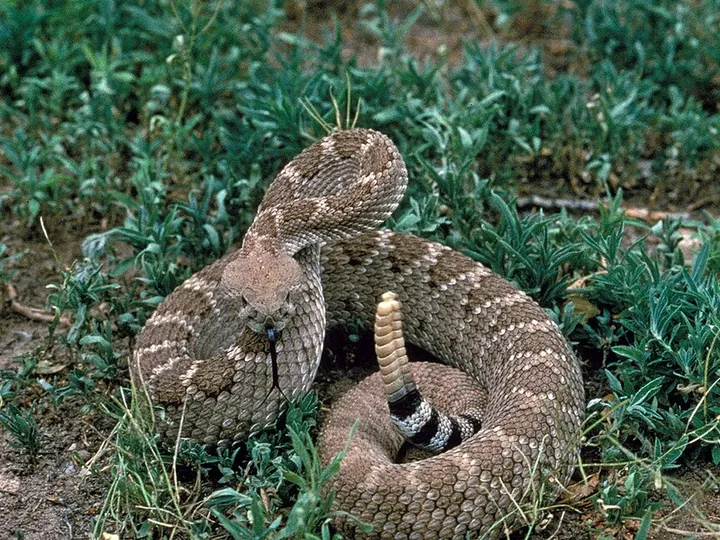
How to identify it
- Gray to tan with dusty diamond blotches
- Black and white bands of equal width just before the rattle
- Two pale stripes on the face
- Heavy body and a broad triangular head
Size: 30–60 in (total length). Habitat: Deserts, grassland and rocky hills from Arkansas to southeastern California.
Also called western diamondback, coontail rattler.
Where it lives
- Lives here
- Rare records
- Gone
- Not here
When it is out
Look-alikes
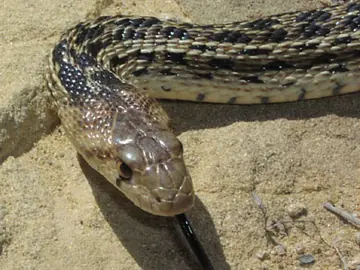
- Western Diamondback vs Mojave Rattlesnake Mojave rattlesnake: dangerous
State by state
| State | Status | Open records | Counties |
|---|---|---|---|
| Texas | Lives here | 4,500 | 167 |
| Arizona | Lives here | 2,913 | 13 |
| New Mexico | Lives here | 1,364 | 26 |
| Oklahoma | Lives here | 817 | 26 |
| California | Lives here | 340 | 4 |
| Arkansas | Lives here | 24 | 5 |
| Nevada | Rare records | 23 | 1 |
| Kansas | Rare records | 11 | 3 |
| Illinois | Rare records | 5 | 0 |
| Montana | Rare records | 4 | 1 |
| Tennessee | Rare records | 4 | 1 |
| Florida | Rare records | 3 | 1 |
| Utah | Rare records | 3 | 2 |
| Wisconsin | Rare records | 3 | 0 |
| Louisiana | Rare records | 2 | 0 |
| Georgia | Not here | 2 | 1 |
| New York | Not here | 2 | 2 |
| North Dakota | Not here | 2 | 1 |
| Ohio | Not here | 2 | 1 |
| South Dakota | Not here | 2 | 2 |
| Michigan | Not here | 1 | 0 |
| Washington | Not here | 1 | 1 |
| Wyoming | Not here | 1 | 1 |
States not listed have no open records and are outside the range.
Questions
Where does the western diamondback rattlesnake live?
In 6 states: Arizona, Arkansas, California, New Mexico, Oklahoma and Texas. Rare records also come from Florida, Illinois, Kansas, Louisiana, Montana and Nevada and other states.
Is the western diamondback rattlesnake dangerous?
Dangerous. Responsible for many of the serious snakebites in the Southwest. A bite is a medical emergency.
How do you identify a western diamondback rattlesnake?
Gray to tan with dusty diamond blotches. Black and white bands of equal width just before the rattle. Two pale stripes on the face.
When is the western diamondback rattlesnake most active?
Most open US records fall in April, June to September.