Are there rattlesnakes in New Mexico?
Western diamondback rattlesnake: Yes. The western diamondback rattlesnake lives in New Mexico. Open records come from 26 counties.
Prairie rattlesnake: Yes. The prairie rattlesnake lives in New Mexico. Open records come from 32 counties.
Western rattlesnake: Yes. The western rattlesnake lives in New Mexico. Open records come from 3 counties.
Mojave rattlesnake: Yes. The Mojave rattlesnake lives in New Mexico. Open records come from 4 counties.
Speckled rattlesnake: Only as rare records. GBIF holds 2 open records of the speckled rattlesnake from New Mexico, the latest from 1991, but there is no known population.
Black-tailed rattlesnake: Yes. The black-tailed rattlesnake lives in New Mexico. Open records come from 15 counties.
Rock rattlesnake: Yes. The rock rattlesnake lives in New Mexico. Open records come from 9 counties.
Tiger rattlesnake: Only as rare records. GBIF holds 2 open records of the tiger rattlesnake from New Mexico, but there is no known population.
Ridge-nosed rattlesnake: Yes. The ridge-nosed rattlesnake lives in New Mexico. Open records come from 1 county.
Western massasauga: Yes. The western massasauga lives in New Mexico. Open records come from 8 counties.
Where in New Mexico
- None recorded
- 1 species
- 2
- 3 to 4
- 5 or more
Rattlesnakes across the US
- Lives here
- Rare records
- Gone
- Not here
How to recognize them
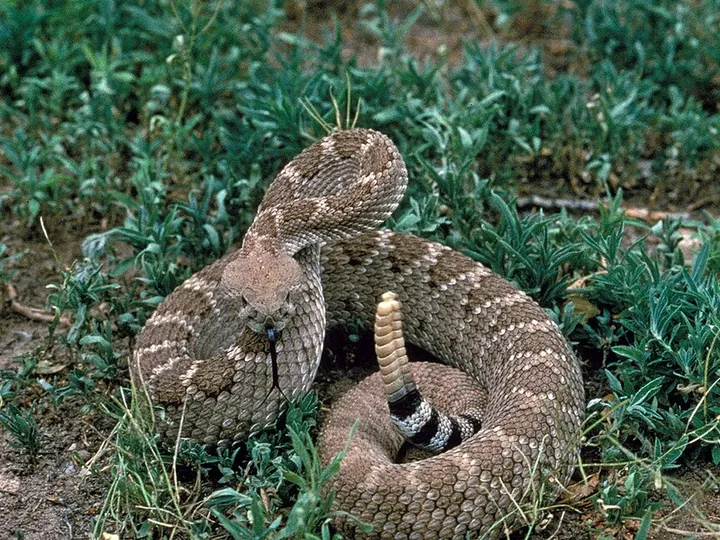
Western diamondback rattlesnake Crotalus atrox
- Gray to tan with dusty diamond blotches
- Black and white bands of equal width just before the rattle
- Two pale stripes on the face
Dangerous. Responsible for many of the serious snakebites in the Southwest. A bite is a medical emergency.
Prairie rattlesnake Crotalus viridis
- Greenish gray to brown with dark blotches down the back
- Blotches narrow into bands near the tail
- Two pale lines on the side of the face
Dangerous. The only rattlesnake across most of the northern plains. A bite is a medical emergency.
Western rattlesnake Crotalus oreganus
- Brown, gray or olive with darker blotches down the back
- Blotches turn to bands toward the rattle
- Pale line from behind the eye to the jaw
Dangerous. The rattlesnake most people meet in California, Oregon, Washington and Idaho. A bite is a medical emergency.
Mojave rattlesnake Crotalus scutulatus
- Greenish to tan with diamonds that have clean pale edges
- White tail bands wider than the black ones
- Pale stripe behind the eye ends above the corner of the mouth
Dangerous. Venom in many populations carries a strong nerve toxin. A bite is a medical emergency even if it looks mild at first.
Often mistaken for rattlesnakes
- Rattlesnake vs Gopher Snake Gopher snake: harmless, lives in New Mexico
- Eastern Diamondback vs Timber Rattlesnake Timber rattlesnake: dangerous
- Timber Rattlesnake vs Copperhead Copperhead: medically significant
- Western Diamondback vs Mojave Rattlesnake Mojave rattlesnake: dangerous, lives in New Mexico
- Pygmy Rattlesnake vs Hognose Snake Eastern hognose snake: harmless
Questions
Are there rattlesnakes in New Mexico?
Yes. 8 species live in New Mexico: Western diamondback rattlesnake, Prairie rattlesnake, Western rattlesnake, Mojave rattlesnake, Black-tailed rattlesnake, Rock rattlesnake, Ridge-nosed rattlesnake and Western massasauga.
What do rattlesnakes look like?
Dark diamonds with pale yellow edges down the back. Two pale diagonal stripes on each side of the face. Thick body and a rattle on the tail.