Western massasauga
Venomous · Sistrurus tergeminus
Medically significantNeeds medical care
Bites are rare and need medical care.
- Lives in
- 8 states
- Size
- 18–30 in
- Open US records
- 1,067
- Group
- Snake
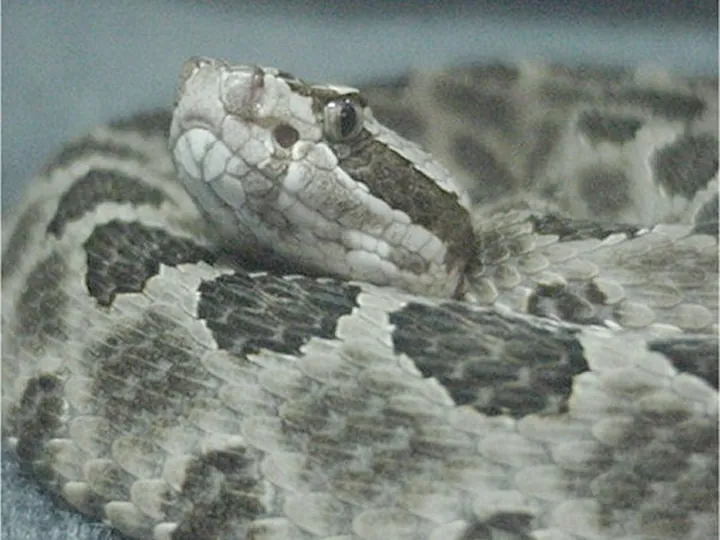
How to identify it
- Pale gray with dark brown blotches down the back
- Small rattle
- Nine large plates on top of the head
Size: 18–30 in (total length). Habitat: Grassland and desert grassland of the southern plains.
Also called prairie massasauga, desert massasauga.
Where it lives
- Lives here
- Rare records
- Gone
- Not here
When it is out
State by state
| State | Status | Open records | Counties |
|---|---|---|---|
| Kansas | Lives here | 509 | 63 |
| Texas | Lives here | 228 | 32 |
| Missouri | Lives here | 105 | 3 |
| Oklahoma | Lives here | 91 | 19 |
| Colorado | Lives here | 40 | 5 |
| Nebraska | Lives here | 35 | 5 |
| New Mexico | Lives here | 34 | 8 |
| Arizona | Lives here | 17 | 1 |
| Indiana | Rare records | 3 | 1 |
| Illinois | Rare records | 1 | 0 |
| Louisiana | Rare records | 1 | 0 |
| Utah | Rare records | 1 | 0 |
| Michigan | Not here | 2 | 2 |
States not listed have no open records and are outside the range.
Questions
Where does the western massasauga live?
In 8 states: Arizona, Colorado, Kansas, Missouri, Nebraska, New Mexico, Oklahoma and Texas. Rare records also come from Illinois, Indiana, Louisiana and Utah.
Is the western massasauga dangerous?
Medically significant. Bites are rare and need medical care.
How do you identify a western massasauga?
Pale gray with dark brown blotches down the back. Small rattle. Nine large plates on top of the head.
When is the western massasauga most active?
Most open US records fall in April to June, September.