Copperhead vs Cottonmouth

The quick tellCopperheads are lighter, with crisp hourglass bands and a plain coppery head. Adult cottonmouths are dark and heavy, have a dark stripe through the eye and usually stay near water.
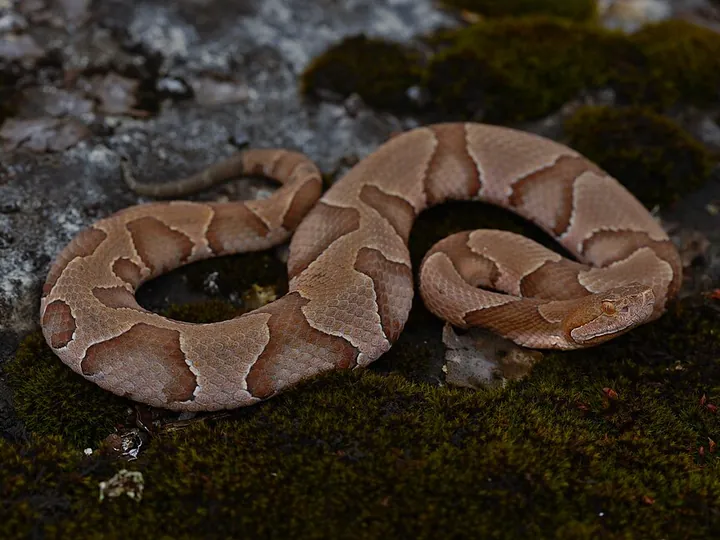
Copperhead (Agkistrodon contortrix)

Photo: Peter Paplanus, CC BY 2.0, via Wikimedia Commons

Copperhead

Medically significant · Agkistrodon contortrix

  • Copper to tan body with dark hourglass bands: wide on the sides, narrow on the spine
  • Plain coppery head with no pattern
  • Young snakes have a bright yellow-green tail tip
  • Cat-like vertical pupils and a pit between eye and nostril

Size: 24–36 in. Habitat: Wooded hillsides, rocky ridges, wood piles and suburban yards in the East and South.

The venomous snake behind most bites in the eastern US. Bites are painful and need medical care, but deaths are extremely rare.
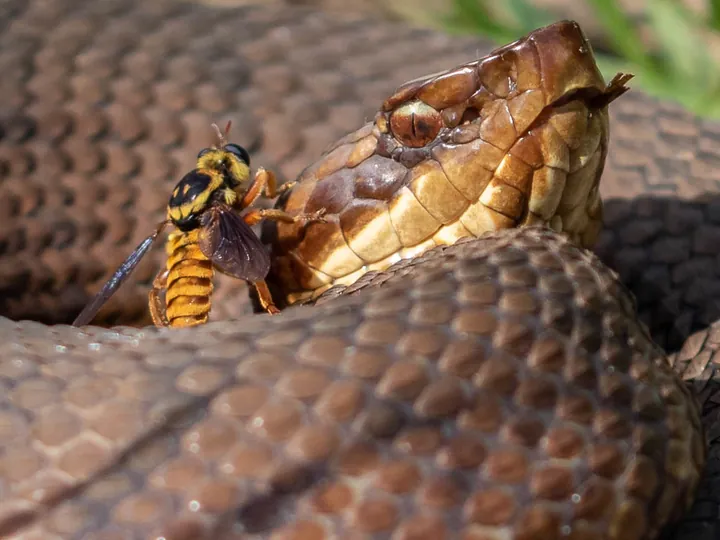
Cottonmouth (Agkistrodon piscivorus)

Photo: kirk gardner, CC BY 4.0, via iNaturalist

Cottonmouth

Dangerous · Agkistrodon piscivorus

  • Heavy, dark olive to black body; bands fade with age
  • Broad flat head with a dark stripe through the eye
  • Swims with the whole body high on the water
  • Opens its mouth wide to show the white lining when threatened

Size: 30–48 in. Habitat: Swamps, slow rivers, marshes and ditches of the Southeast.

A bite is a medical emergency. Most snakes people call water moccasins outside its range are harmless water snakes.

Where each one lives

Alabama: both live hereAlaska: neitherArizona: neitherArkansas: both live hereCalifornia: neitherColorado: neitherConnecticut: Copperhead onlyDelaware: Copperhead onlyFlorida: both live hereGeorgia: both live hereHawaii: neitherIdaho: neitherIllinois: both live hereIndiana: Copperhead onlyIowa: Copperhead onlyKansas: Copperhead onlyKentucky: both live hereLouisiana: both live hereMaine: neitherMaryland: Copperhead onlyMassachusetts: Copperhead onlyMichigan: neitherMinnesota: neitherMississippi: both live hereMissouri: both live hereMontana: neitherNebraska: Copperhead onlyNevada: neitherNew Hampshire: neitherNew Jersey: Copperhead onlyNew Mexico: neitherNew York: Copperhead onlyNorth Carolina: both live hereNorth Dakota: neitherOhio: Copperhead onlyOklahoma: both live hereOregon: neitherPennsylvania: Copperhead onlyRhode Island: neitherSouth Carolina: both live hereSouth Dakota: neitherTennessee: both live hereTexas: both live hereUtah: neitherVermont: neitherVirginia: both live hereWashington: neitherWest Virginia: Copperhead onlyWisconsin: neitherWyoming: neither
Copperhead: 28 states. Cottonmouth: 15 states. Both live in 15 states.

Side by side

CopperheadCottonmouth
DangerMedically significantDangerous
Size24–36 in30–48 in
States2815
HabitatWooded hillsides, rocky ridges, wood piles and suburban yards in the East and SouthSwamps, slow rivers, marshes and ditches of the Southeast

Questions

How can you tell a copperhead from a cottonmouth?

Copperheads are lighter, with crisp hourglass bands and a plain coppery head. Adult cottonmouths are dark and heavy, have a dark stripe through the eye and usually stay near water.

Which one is dangerous?

The copperhead: medically significant. The cottonmouth: dangerous. If you are not sure, keep your distance and do not handle it.

Where do both live?

Both live in 15 states: Alabama, Arkansas, Florida, Georgia, Illinois, Kentucky, Louisiana, Mississippi, Missouri, North Carolina, Oklahoma, South Carolina, Tennessee, Texas and Virginia.

More look-alikes