Black-tailed rattlesnake
Venomous · Crotalus molossus
DangerousA bite is a medical emergency
A bite is a medical emergency.
- Lives in
- 3 states
- Size
- 30–42 in
- Open US records
- 2,258
- Group
- Snake
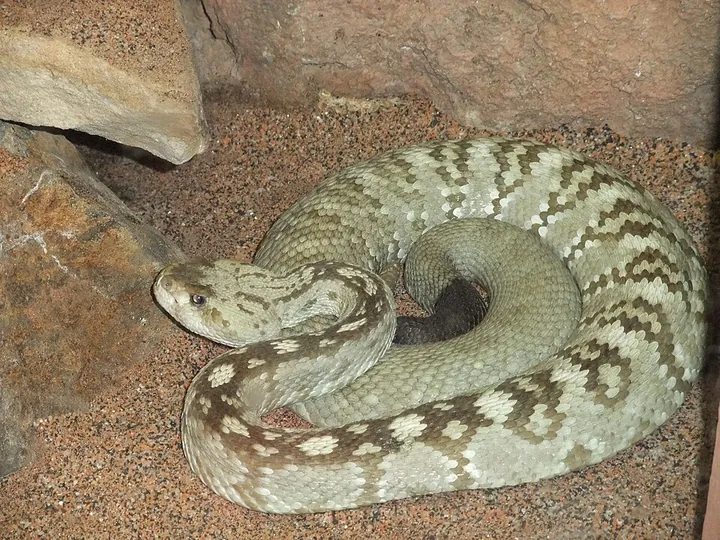
How to identify it
- Solid black tail before the rattle
- Olive, yellow or greenish body with dark diamond patches
- Black mask across the snout
Size: 30–42 in (total length). Habitat: Rocky mountains and canyons of the Southwest.
Also called green rattler.
Where it lives
- Lives here
- Rare records
- Gone
- Not here
When it is out
State by state
| State | Status | Open records | Counties |
|---|---|---|---|
| Arizona | Lives here | 1,054 | 13 |
| Texas | Lives here | 768 | 25 |
| New Mexico | Lives here | 434 | 15 |
| Louisiana | Rare records | 1 | 0 |
| Minnesota | Not here | 1 | 1 |
States not listed have no open records and are outside the range.
Questions
Where does the black-tailed rattlesnake live?
In 3 states: Arizona, New Mexico and Texas. Rare records also come from Louisiana.
Is the black-tailed rattlesnake dangerous?
Dangerous. A bite is a medical emergency.
How do you identify a black-tailed rattlesnake?
Solid black tail before the rattle. Olive, yellow or greenish body with dark diamond patches. Black mask across the snout.
When is the black-tailed rattlesnake most active?
Most open US records fall in July to September.