Venomous snakes in New Mexico
Western diamondback rattlesnake, Western rattlesnake, Prairie rattlesnake, Mojave rattlesnake, Black-tailed rattlesnake, Rock rattlesnake, Ridge-nosed rattlesnake, Western massasauga, Sonoran coral snake. A bite from any of these is a medical emergency.
How to recognize them
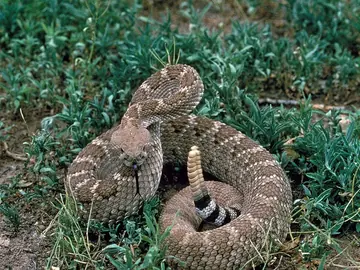 Western diamondback rattlesnakeDangerous1,364 records, 26 counties
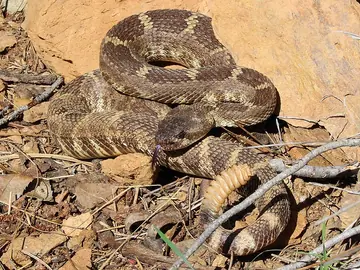 Western rattlesnakeDangerous6 records, 3 counties
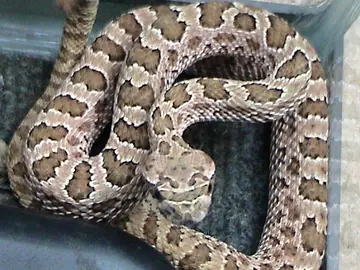 Prairie rattlesnakeDangerous1,360 records, 32 counties
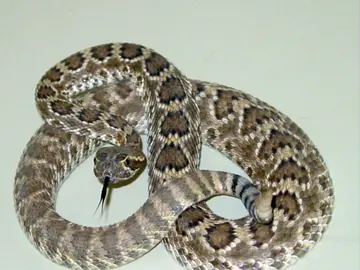 Mojave rattlesnakeDangerous334 records, 4 counties
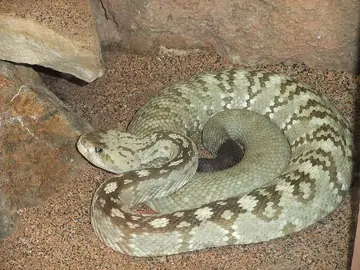 Black-tailed rattlesnakeDangerous434 records, 15 counties
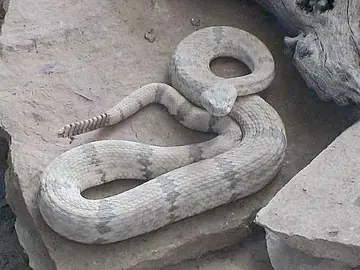 Rock rattlesnakeDangerous271 records, 9 counties
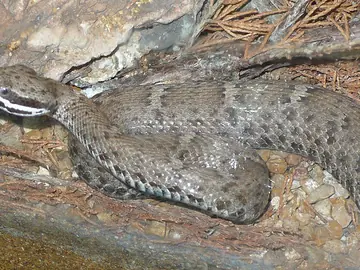 Ridge-nosed rattlesnakeDangerous23 records, 1 county
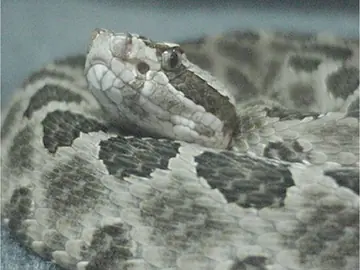 Western massasaugaMedically significant34 records, 8 counties
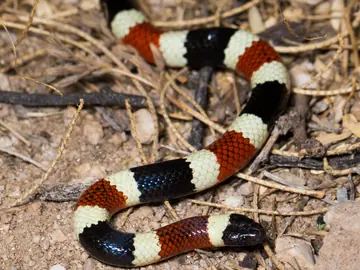 Sonoran coral snakeMedically significant7 records, 2 counties
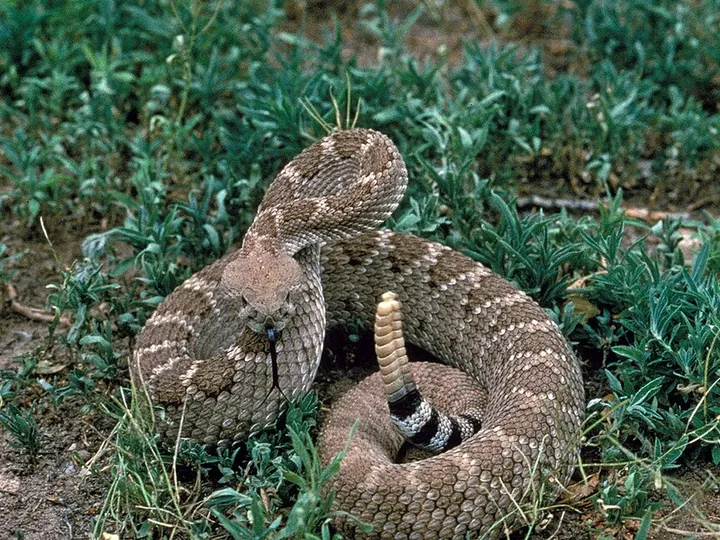
Western diamondback rattlesnake Crotalus atrox
- Gray to tan with dusty diamond blotches
- Black and white bands of equal width just before the rattle
- Two pale stripes on the face
Western rattlesnake Crotalus oreganus
- Brown, gray or olive with darker blotches down the back
- Blotches turn to bands toward the rattle
- Pale line from behind the eye to the jaw
Prairie rattlesnake Crotalus viridis
- Greenish gray to brown with dark blotches down the back
- Blotches narrow into bands near the tail
- Two pale lines on the side of the face
Mojave rattlesnake Crotalus scutulatus
- Greenish to tan with diamonds that have clean pale edges
- White tail bands wider than the black ones
- Pale stripe behind the eye ends above the corner of the mouth
Black-tailed rattlesnake Crotalus molossus
- Solid black tail before the rattle
- Olive, yellow or greenish body with dark diamond patches
- Black mask across the snout
Rock rattlesnake Crotalus lepidus
- Small rattlesnake with crisp dark crossbands
- Gray, bluish or pinkish body that matches limestone or granite
- Rattle on the tail
Ridge-nosed rattlesnake Crotalus willardi
- Raised ridge along the edge of the snout
- White stripes on the face
- Reddish brown with thin pale crossbars
Western massasauga Sistrurus tergeminus
- Pale gray with dark brown blotches down the back
- Small rattle
- Nine large plates on top of the head
Sonoran coral snake Micruroides euryxanthus
- Wide red and black rings separated by narrow white or pale yellow rings
- Black head
- Pencil-thin body
Every venomous snake species known from the US is on this site.
Counties with records
- None recorded
- 1 species
- 2
- 3 to 4
- 5 or more
Active months
Rare records
- Rare records Speckled rattlesnake 2 open records, latest 1991
- Rare records Texas coral snake 1 open record
- Rare records Tiger rattlesnake 2 open records
Harmless snakes people mistake for them
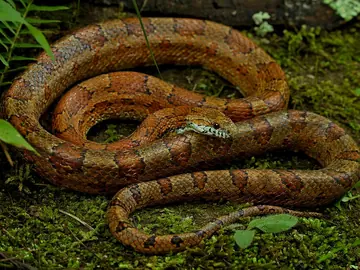
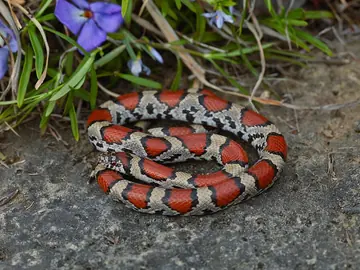
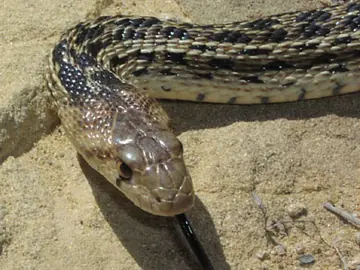
- Rattlesnake vs Gopher Snake Gopher snake: harmless
Quick answers
Questions
How many venomous snakes are in New Mexico?
9 species live in the state: Western diamondback rattlesnake, Western rattlesnake, Prairie rattlesnake, Mojave rattlesnake, Black-tailed rattlesnake, Rock rattlesnake, Ridge-nosed rattlesnake, Western massasauga and Sonoran coral snake.
Which venomous snakes in New Mexico are dangerous?
Western diamondback rattlesnake, Western rattlesnake, Prairie rattlesnake, Mojave rattlesnake, Black-tailed rattlesnake, Rock rattlesnake, Ridge-nosed rattlesnake, Western massasauga and Sonoran coral snake: a bite is a medical emergency.
When are venomous snakes most active in New Mexico?
Most open records fall in July to September.
Which harmless snakes get mistaken for venomous ones in New Mexico?
Gopher snake. See the side-by-side comparisons below.
More for New Mexico
- All venomous animals in New Mexico
- Venomous spiders in New Mexico
- Scorpions in New Mexico
- Centipedes in New Mexico