Speckled rattlesnake
Venomous · Crotalus mitchellii
DangerousA bite is a medical emergency
A bite is a medical emergency.
- Lives in
- 4 states
- Size
- 24–40 in
- Open US records
- 1,649
- Group
- Snake
How to identify it
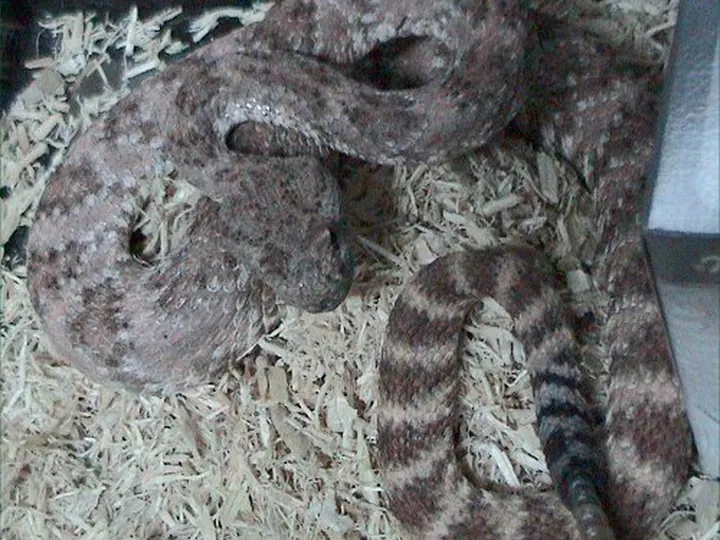
- Speckled, granite-like look that matches the local rock
- Color runs from cream to pink, gray or brown
- Faint bands, sharper near the tail
- Rattle on the tail
Size: 24–40 in (total length). Habitat: Rocky desert slopes and canyons.
Also called Panamint rattlesnake.
Includes the southwestern speckled (C. pyrrhus) and Panamint (C. stephensi) rattlesnakes, which some authors treat as separate species.
Where it lives
- Lives here
- Rare records
- Gone
- Not here
When it is out
State by state
| State | Status | Open records | Counties |
|---|---|---|---|
| California | Lives here | 1,164 | 10 |
| Arizona | Lives here | 251 | 8 |
| Nevada | Lives here | 227 | 5 |
| Utah | Lives here | 2 | 1 |
| New Mexico | Rare records | 2 | 1 |
| Kansas | Not here | 2 | 1 |
| Florida | Not here | 1 | 1 |
States not listed have no open records and are outside the range.
Questions
Where does the speckled rattlesnake live?
In 4 states: Arizona, California, Nevada and Utah. Rare records also come from New Mexico.
Is the speckled rattlesnake dangerous?
Dangerous. A bite is a medical emergency.
How do you identify a speckled rattlesnake?
Speckled, granite-like look that matches the local rock. Color runs from cream to pink, gray or brown. Faint bands, sharper near the tail.
When is the speckled rattlesnake most active?
Most open US records fall in April to June.