Mojave rattlesnake
Venomous · Crotalus scutulatus
DangerousA bite is a medical emergency
Venom in many populations carries a strong nerve toxin. A bite is a medical emergency even if it looks mild at first.
- Lives in
- 6 states
- Size
- 24–48 in
- Open US records
- 4,617
- Group
- Snake
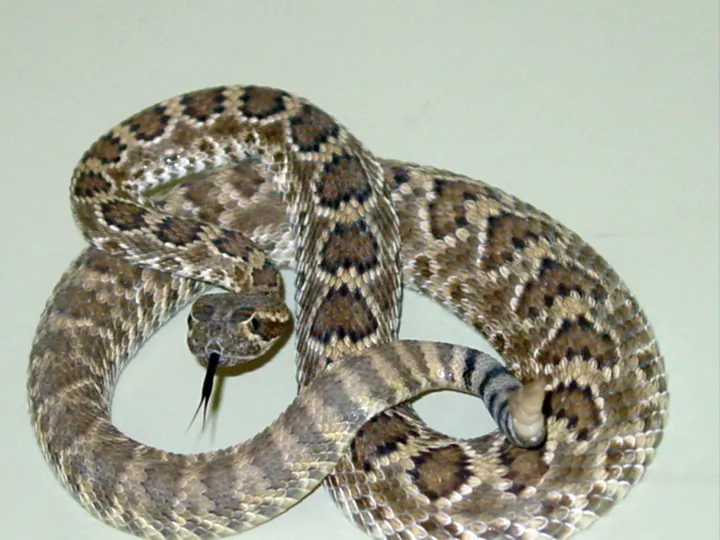
How to identify it
- Greenish to tan with diamonds that have clean pale edges
- White tail bands wider than the black ones
- Pale stripe behind the eye ends above the corner of the mouth
- Looks a lot like a western diamondback
Size: 24–48 in (total length). Habitat: Open desert flats with creosote and Joshua trees.
Also called Mojave green.
Where it lives
- Lives here
- Rare records
- Gone
- Not here
When it is out
Look-alikes
- Western Diamondback vs Mojave Rattlesnake Western diamondback rattlesnake: dangerous
State by state
| State | Status | Open records | Counties |
|---|---|---|---|
| Arizona | Lives here | 2,809 | 13 |
| California | Lives here | 796 | 7 |
| Texas | Lives here | 579 | 9 |
| New Mexico | Lives here | 334 | 4 |
| Nevada | Lives here | 94 | 3 |
| Utah | Lives here | 4 | 2 |
| Michigan | Not here | 1 | 1 |
States not listed have no open records and are outside the range.
Questions
Where does the Mojave rattlesnake live?
In 6 states: Arizona, California, Nevada, New Mexico, Texas and Utah.
Is the Mojave rattlesnake dangerous?
Dangerous. Venom in many populations carries a strong nerve toxin. A bite is a medical emergency even if it looks mild at first.
How do you identify a Mojave rattlesnake?
Greenish to tan with diamonds that have clean pale edges. White tail bands wider than the black ones. Pale stripe behind the eye ends above the corner of the mouth.
When is the Mojave rattlesnake most active?
Most open US records fall in July to September.