Eastern Diamondback vs Timber Rattlesnake

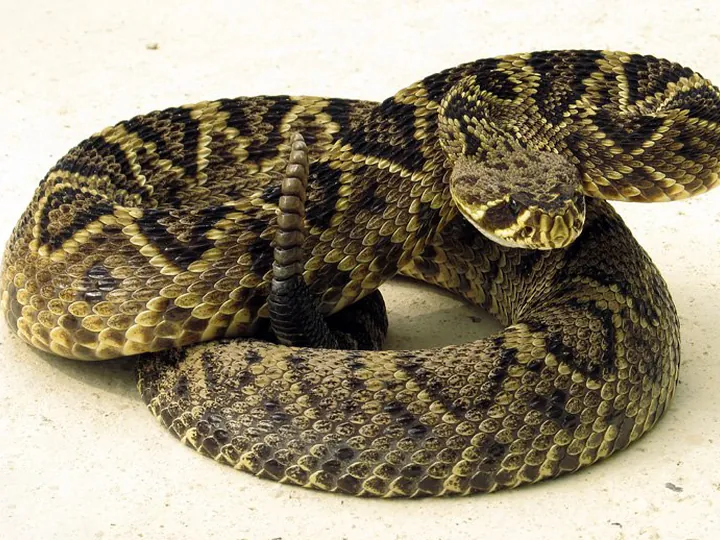
The quick tellEastern diamondbacks have diamonds with yellow edges and pale stripes on the face. Timber rattlesnakes have dark chevron bands and a solid black tail.
Eastern diamondback rattlesnake (Crotalus adamanteus)

Photo: Bladerunner8u, CC BY-SA 3.0, via Wikimedia Commons

Eastern diamondback rattlesnake

Dangerous · Crotalus adamanteus

  • Dark diamonds with pale yellow edges down the back
  • Two pale diagonal stripes on each side of the face
  • Thick body and a rattle on the tail
  • Largest rattlesnake in North America

Size: 36–72 in. Habitat: Pine flatwoods, sandhills and coastal scrub of the Southeast coastal plain.

A large snake with a big venom yield. A bite is a medical emergency.
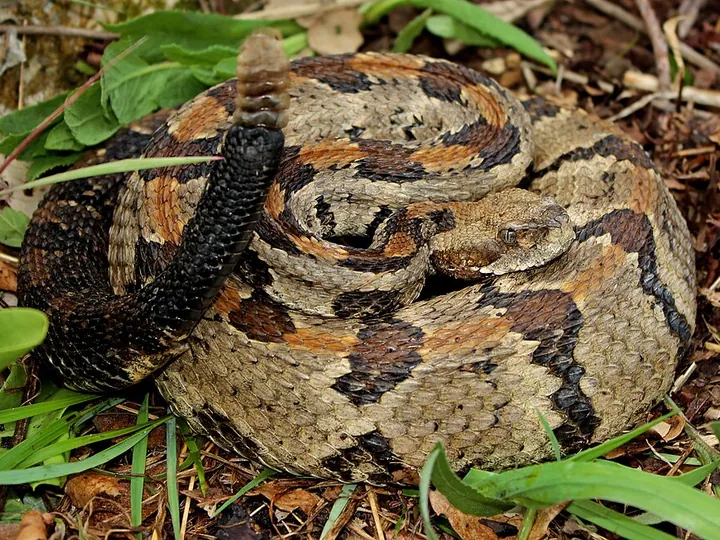
Timber rattlesnake (Crotalus horridus)

Photo: Peter Paplanus from St. Louis, Missouri, CC BY 2.0, via Wikimedia Commons

Timber rattlesnake

Dangerous · Crotalus horridus

  • Dark V- or chevron-shaped bands across the back
  • Black tail ending in a rattle
  • Yellow, tan or dark phases; some are almost black
  • Southern snakes often have a rusty stripe down the spine

Size: 36–60 in. Habitat: Rocky wooded hillsides in the North, bottomland forest and canebrakes in the South.

Usually calm and slow to strike, but a bite is a medical emergency.

Where each one lives

Alabama: both live hereAlaska: neitherArizona: neitherArkansas: Timber rattlesnake onlyCalifornia: neitherColorado: neitherConnecticut: Timber rattlesnake onlyDelaware: neitherFlorida: both live hereGeorgia: both live hereHawaii: neitherIdaho: neitherIllinois: Timber rattlesnake onlyIndiana: Timber rattlesnake onlyIowa: Timber rattlesnake onlyKansas: Timber rattlesnake onlyKentucky: Timber rattlesnake onlyLouisiana: both live hereMaine: neitherMaryland: Timber rattlesnake onlyMassachusetts: Timber rattlesnake onlyMichigan: neitherMinnesota: Timber rattlesnake onlyMississippi: both live hereMissouri: Timber rattlesnake onlyMontana: neitherNebraska: Timber rattlesnake onlyNevada: neitherNew Hampshire: Timber rattlesnake onlyNew Jersey: Timber rattlesnake onlyNew Mexico: neitherNew York: Timber rattlesnake onlyNorth Carolina: both live hereNorth Dakota: neitherOhio: Timber rattlesnake onlyOklahoma: Timber rattlesnake onlyOregon: neitherPennsylvania: Timber rattlesnake onlyRhode Island: neitherSouth Carolina: both live hereSouth Dakota: neitherTennessee: Timber rattlesnake onlyTexas: Timber rattlesnake onlyUtah: neitherVermont: Timber rattlesnake onlyVirginia: Timber rattlesnake onlyWashington: neitherWest Virginia: Timber rattlesnake onlyWisconsin: Timber rattlesnake onlyWyoming: neither
Eastern diamondback rattlesnake: 7 states. Timber rattlesnake: 31 states. Both live in 7 states.

Side by side

Eastern diamondback rattlesnakeTimber rattlesnake
DangerDangerousDangerous
Size36–72 in36–60 in
States731
HabitatPine flatwoods, sandhills and coastal scrub of the Southeast coastal plainRocky wooded hillsides in the North, bottomland forest and canebrakes in the South

Questions

How can you tell a eastern diamondback rattlesnake from a timber rattlesnake?

Eastern diamondbacks have diamonds with yellow edges and pale stripes on the face. Timber rattlesnakes have dark chevron bands and a solid black tail.

Which one is dangerous?

The eastern diamondback rattlesnake: dangerous. The timber rattlesnake: dangerous. If you are not sure, keep your distance and do not handle it.

Where do both live?

Both live in 7 states: Alabama, Florida, Georgia, Louisiana, Mississippi, North Carolina and South Carolina.

More look-alikes