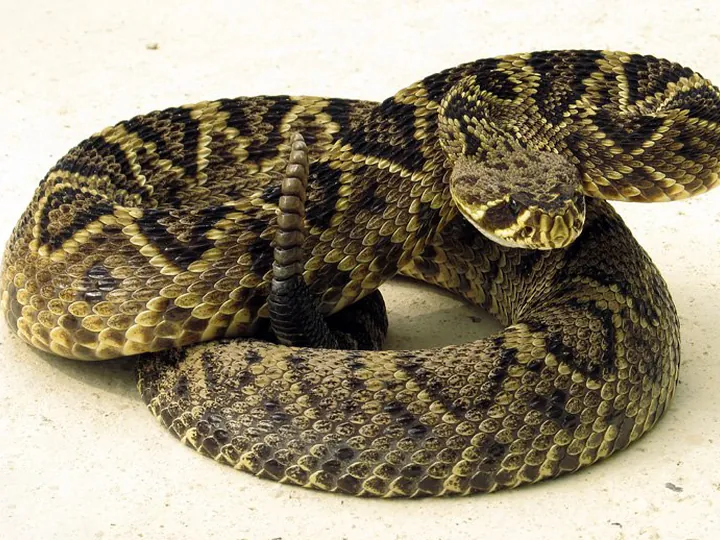
Eastern diamondback rattlesnake

Venomous · Crotalus adamanteus
DangerousA bite is a medical emergency

A large snake with a big venom yield. A bite is a medical emergency.

Lives in
7 states
Size
36–72 in
Open US records
1,378
Group
Snake
Eastern diamondback rattlesnake (Crotalus adamanteus)
Photo: Bladerunner8u, CC BY-SA 3.0, via Wikimedia Commons

How to identify it

Size: 36–72 in (total length). Habitat: Pine flatwoods, sandhills and coastal scrub of the Southeast coastal plain.

Also called eastern diamondback.

Where it lives

Alabama: lives here, 47 open recordsAlaska: not here, 0 open recordsArizona: not here, 0 open recordsArkansas: rare records, 3 open recordsCalifornia: not here, 1 open recordColorado: not here, 0 open recordsConnecticut: not here, 0 open recordsDelaware: not here, 0 open recordsFlorida: lives here, 849 open recordsGeorgia: lives here, 287 open recordsHawaii: not here, 0 open recordsIdaho: not here, 0 open recordsIllinois: not here, 0 open recordsIndiana: not here, 0 open recordsIowa: not here, 0 open recordsKansas: not here, 1 open recordKentucky: not here, 0 open recordsLouisiana: lives here, 4 open recordsMaine: not here, 0 open recordsMaryland: not here, 0 open recordsMassachusetts: not here, 0 open recordsMichigan: not here, 0 open recordsMinnesota: not here, 0 open recordsMississippi: lives here, 34 open recordsMissouri: not here, 0 open recordsMontana: not here, 0 open recordsNebraska: not here, 0 open recordsNevada: not here, 0 open recordsNew Hampshire: not here, 0 open recordsNew Jersey: not here, 0 open recordsNew Mexico: not here, 0 open recordsNew York: not here, 1 open recordNorth Carolina: lives here, 93 open recordsNorth Dakota: not here, 0 open recordsOhio: not here, 1 open recordOklahoma: not here, 0 open recordsOregon: not here, 0 open recordsPennsylvania: not here, 0 open recordsRhode Island: not here, 0 open recordsSouth Carolina: lives here, 53 open recordsSouth Dakota: not here, 0 open recordsTennessee: not here, 0 open recordsTexas: rare records, 4 open recordsUtah: not here, 0 open recordsVermont: not here, 0 open recordsVirginia: not here, 0 open recordsWashington: not here, 0 open recordsWest Virginia: not here, 0 open recordsWisconsin: not here, 0 open recordsWyoming: not here, 0 open records
Lives in 7 states; rare records from 2 more states. Tap a state for details.

When it is out

Jan: 28 records (Eastern diamondback rattlesnake)JanFeb: 30 records (Eastern diamondback rattlesnake)FebMar: 38 records (Eastern diamondback rattlesnake)MarApr: 48 records (Eastern diamondback rattlesnake)AprMay: 46 records (Eastern diamondback rattlesnake)MayJun: 36 records (Eastern diamondback rattlesnake)JunJul: 39 records (Eastern diamondback rattlesnake)JulAug: 36 records (Eastern diamondback rattlesnake)AugSep: 44 records (Eastern diamondback rattlesnake)SepOct: 51 records (Eastern diamondback rattlesnake)OctNov: 32 records (Eastern diamondback rattlesnake)NovDec: 35 records (Eastern diamondback rattlesnake)Dec
Open US records by month; most fall in March to July, September to October.

Look-alikes

State by state

StateStatusOpen recordsCounties
FloridaLives here84955
GeorgiaLives here28726
North CarolinaLives here932
South CarolinaLives here533
AlabamaLives here479
MississippiLives here349
LouisianaLives here40
TexasRare records40
ArkansasRare records31
CaliforniaNot here10
KansasNot here11
New YorkNot here10
OhioNot here11

States not listed have no open records and are outside the range.

Questions

Where does the eastern diamondback rattlesnake live?

In 7 states: Alabama, Florida, Georgia, Louisiana, Mississippi, North Carolina and South Carolina. Rare records also come from Arkansas and Texas.

Is the eastern diamondback rattlesnake dangerous?

Dangerous. A large snake with a big venom yield. A bite is a medical emergency.

How do you identify a eastern diamondback rattlesnake?

Dark diamonds with pale yellow edges down the back. Two pale diagonal stripes on each side of the face. Thick body and a rattle on the tail.

When is the eastern diamondback rattlesnake most active?

Most open US records fall in March to July, September to October.