Eastern coral snake
Its venom attacks the nervous system and symptoms can take hours to show. Any bite is a medical emergency.
- Lives in
- 7 states
- Size
- 20–30 in
- Open US records
- 1,056
- Group
- Snake
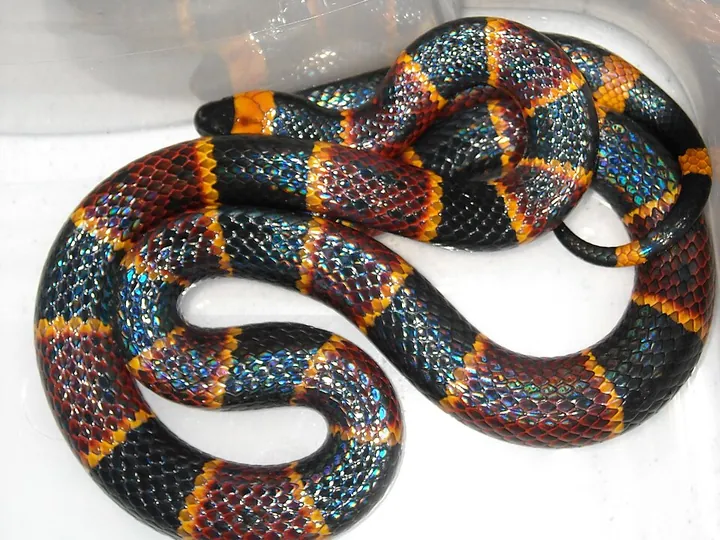
How to identify it
- Red, yellow and black rings; red rings touch yellow ones
- Black snout followed by a wide yellow band
- Rings go all the way around the body
- Slim, with a small head
Size: 20–30 in (total length). Habitat: Sandy pine woods and hammocks of the Southeast.
Also called coral snake, harlequin coral snake.
Where it lives
- Lives here
- Rare records
- Gone
- Not here
When it is out
Look-alikes
- Coral Snake vs King Snake Scarlet kingsnake: harmless
- Coral Snake vs Milk Snake Milk snake: harmless
- Coral Snake vs Scarlet Snake Scarlet snake: harmless
State by state
| State | Status | Open records | Counties |
|---|---|---|---|
| Florida | Lives here | 761 | 48 |
| Georgia | Lives here | 112 | 11 |
| North Carolina | Lives here | 49 | 11 |
| Louisiana | Lives here | 39 | 6 |
| South Carolina | Lives here | 37 | 10 |
| Alabama | Lives here | 33 | 9 |
| Mississippi | Lives here | 17 | 5 |
| Arkansas | Rare records | 4 | 0 |
| Tennessee | Rare records | 1 | 0 |
| Arizona | Not here | 1 | 1 |
| Massachusetts | Not here | 1 | 1 |
| Minnesota | Not here | 1 | 0 |
States not listed have no open records and are outside the range.
Questions
Where does the eastern coral snake live?
In 7 states: Alabama, Florida, Georgia, Louisiana, Mississippi, North Carolina and South Carolina. Rare records also come from Arkansas and Tennessee.
Is the eastern coral snake dangerous?
Dangerous. Its venom attacks the nervous system and symptoms can take hours to show. Any bite is a medical emergency.
How do you identify a eastern coral snake?
Red, yellow and black rings; red rings touch yellow ones. Black snout followed by a wide yellow band. Rings go all the way around the body.
When is the eastern coral snake most active?
Most open US records fall in April to June, August to October.