Giant desert hairy scorpion
Venomous · Hadrurus arizonensis
Painful, rarely seriousUsually like a bee or wasp sting
Looks scary, but the sting is about like a bee sting for most people.
- Lives in
- 4 states
- Size
- 4–5.5 in
- Open US records
- 257
- Group
- Scorpion
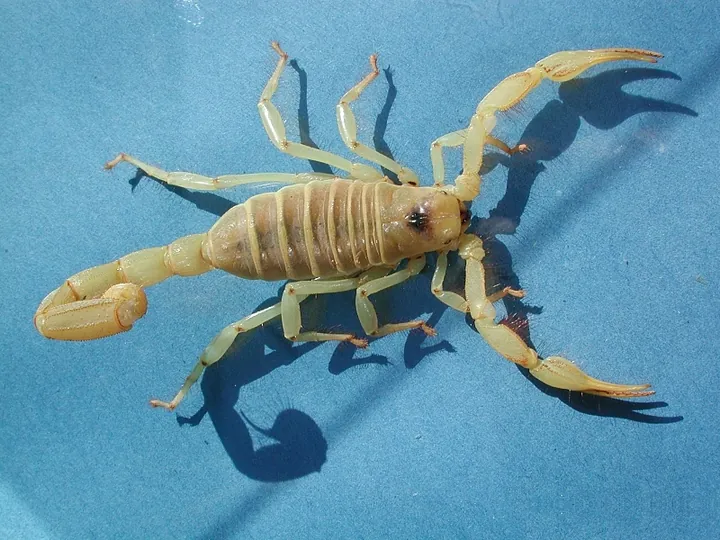
How to identify it
- Largest scorpion in North America
- Yellow body with dark back
- Brown hairs on the tail and legs
- Thick pincers
Size: 4–5.5 in (length). Habitat: Sandy desert flats and washes.
Also called desert hairy scorpion.
Where it lives
- Lives here
- Rare records
- Gone
- Not here
When it is out
Look-alikes
- Bark Scorpion vs Desert Hairy Scorpion Arizona bark scorpion: medically significant
State by state
| State | Status | Open records | Counties |
|---|---|---|---|
| Arizona | Lives here | 139 | 8 |
| California | Lives here | 96 | 7 |
| Nevada | Lives here | 13 | 2 |
| Utah | Lives here | 7 | 1 |
| New York | Not here | 2 | 1 |
States not listed have no open records and are outside the range.
Questions
Where does the giant desert hairy scorpion live?
In 4 states: Arizona, California, Nevada and Utah.
Is the giant desert hairy scorpion dangerous?
Painful, rarely serious. Looks scary, but the sting is about like a bee sting for most people.
How do you identify a giant desert hairy scorpion?
Largest scorpion in North America. Yellow body with dark back. Brown hairs on the tail and legs.
When is the giant desert hairy scorpion most active?
Most open US records fall in April, June, August to September.