Giant desert centipede

Venomous · Scolopendra heros
Painful, rarely seriousUsually like a bee or wasp sting

Bites are painful with local swelling. Serious effects are rare.

Lives in
7 states
Size
6–8 in
Open US records
309
Group
Large centipede
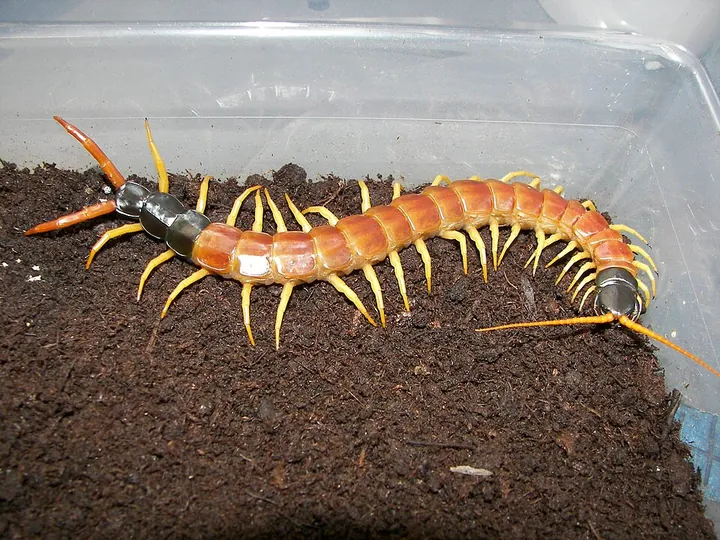
Giant desert centipede (Scolopendra heros)
Photo: John, CC BY 2.0, via Wikimedia Commons

How to identify it

Size: 6–8 in (length). Habitat: Rocky desert, grassland and woods of the southern plains and Southwest.

Also called giant redheaded centipede, Texas redheaded centipede.

Where it lives

Alabama: not here, 0 open recordsAlaska: not here, 0 open recordsArizona: lives here, 73 open recordsArkansas: lives here, 9 open recordsCalifornia: not here, 0 open recordsColorado: rare records, 4 open recordsConnecticut: not here, 0 open recordsDelaware: not here, 0 open recordsFlorida: not here, 0 open recordsGeorgia: not here, 0 open recordsHawaii: not here, 0 open recordsIdaho: not here, 0 open recordsIllinois: not here, 0 open recordsIndiana: not here, 0 open recordsIowa: not here, 0 open recordsKansas: lives here, 5 open recordsKentucky: not here, 0 open recordsLouisiana: rare records, 5 open recordsMaine: not here, 0 open recordsMaryland: not here, 0 open recordsMassachusetts: not here, 0 open recordsMichigan: not here, 0 open recordsMinnesota: not here, 0 open recordsMississippi: not here, 0 open recordsMissouri: lives here, 6 open recordsMontana: not here, 0 open recordsNebraska: not here, 0 open recordsNevada: not here, 0 open recordsNew Hampshire: not here, 0 open recordsNew Jersey: not here, 0 open recordsNew Mexico: lives here, 10 open recordsNew York: not here, 0 open recordsNorth Carolina: not here, 0 open recordsNorth Dakota: not here, 0 open recordsOhio: not here, 0 open recordsOklahoma: lives here, 32 open recordsOregon: not here, 0 open recordsPennsylvania: not here, 0 open recordsRhode Island: not here, 0 open recordsSouth Carolina: not here, 0 open recordsSouth Dakota: not here, 0 open recordsTennessee: not here, 0 open recordsTexas: lives here, 165 open recordsUtah: not here, 0 open recordsVermont: not here, 0 open recordsVirginia: not here, 0 open recordsWashington: not here, 0 open recordsWest Virginia: not here, 0 open recordsWisconsin: not here, 0 open recordsWyoming: not here, 0 open records
Lives in 7 states; rare records from 2 more states. Tap a state for details.

When it is out

Jan: 3 records (Giant desert centipede)JanFeb: 3 records (Giant desert centipede)FebMar: 10 records (Giant desert centipede)MarApr: 34 records (Giant desert centipede)AprMay: 37 records (Giant desert centipede)MayJun: 24 records (Giant desert centipede)JunJul: 24 records (Giant desert centipede)JulAug: 31 records (Giant desert centipede)AugSep: 31 records (Giant desert centipede)SepOct: 17 records (Giant desert centipede)OctNov: 6 records (Giant desert centipede)NovDec: 1 records (Giant desert centipede)Dec
Open US records by month; most fall in April to May, August to September.

Look-alikes

State by state

StateStatusOpen recordsCounties
TexasLives here16543
ArizonaLives here736
OklahomaLives here326
New MexicoLives here102
ArkansasLives here92
MissouriLives here62
KansasLives here52
LouisianaRare records51
ColoradoRare records41

States not listed have no open records and are outside the range.

Questions

Where does the giant desert centipede live?

In 7 states: Arizona, Arkansas, Kansas, Missouri, New Mexico, Oklahoma and Texas. Rare records also come from Colorado and Louisiana.

Is the giant desert centipede dangerous?

Painful, rarely serious. Bites are painful with local swelling. Serious effects are rare.

How do you identify a giant desert centipede?

Largest centipede in North America. Red or orange head, dark blue-black body, yellow legs in many forms. 21 pairs of legs.

When is the giant desert centipede most active?

Most open US records fall in April to May, August to September.