Hobo spider
Not venomous · Eratigena agrestis
HarmlessNot dangerous to people
Once blamed for wounds like a recluse bite. Later studies found no evidence that its bite causes them.
- Lives in
- 6 states
- Size
- 0.4–0.6 in
- Open US records
- 170
- Group
- Spider
How to identify it
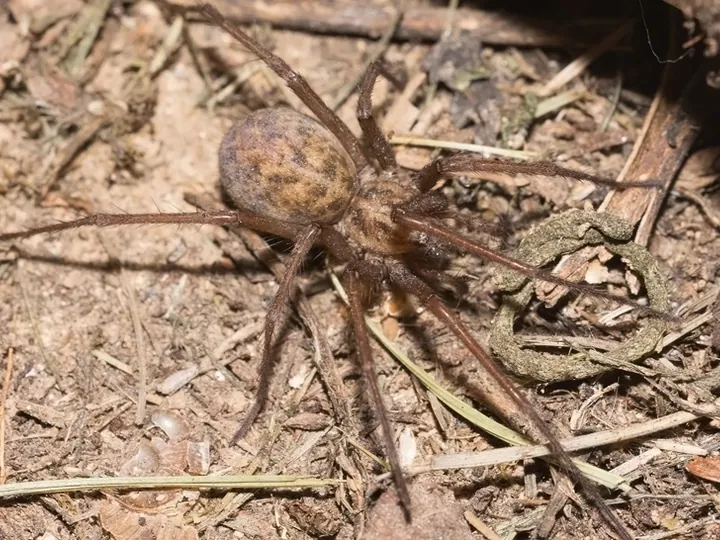
- Brown funnel-web spider with a herringbone pattern on the abdomen
- Plain brown legs
- Funnel-shaped web in window wells, wood piles and basements
Size: 0.4–0.6 in (body length). Habitat: Pacific Northwest and the northern Rockies; introduced from Europe.
Where it lives
- Lives here
- Rare records
- Gone
- Not here
When it is out
Look-alikes
- Brown Recluse vs Hobo Spider Brown recluse: medically significant
- Hobo Spider vs Wolf Spider Wolf spider: harmless
State by state
| State | Status | Open records | Counties |
|---|---|---|---|
| Washington | Lives here | 43 | 10 |
| Colorado | Lives here | 34 | 6 |
| Oregon | Lives here | 33 | 9 |
| Utah | Lives here | 25 | 5 |
| Montana | Lives here | 17 | 4 |
| Idaho | Lives here | 14 | 7 |
| Wyoming | Rare records | 4 | 2 |
States not listed have no open records and are outside the range.
Questions
Where does the hobo spider live?
In 6 states: Colorado, Idaho, Montana, Oregon, Utah and Washington. Rare records also come from Wyoming.
Is the hobo spider dangerous?
Harmless. Once blamed for wounds like a recluse bite. Later studies found no evidence that its bite causes them.
How do you identify a hobo spider?
Brown funnel-web spider with a herringbone pattern on the abdomen. Plain brown legs. Funnel-shaped web in window wells, wood piles and basements.
When is the hobo spider most active?
Most open US records fall in July to September.