Northern scorpion
Venomous · Paruroctonus boreus
Painful, rarely seriousUsually like a bee or wasp sting
The scorpion of the northern states. Sting is mild.
- Lives in
- 10 states
- Size
- 1.5–2.2 in
- Open US records
- 204
- Group
- Scorpion
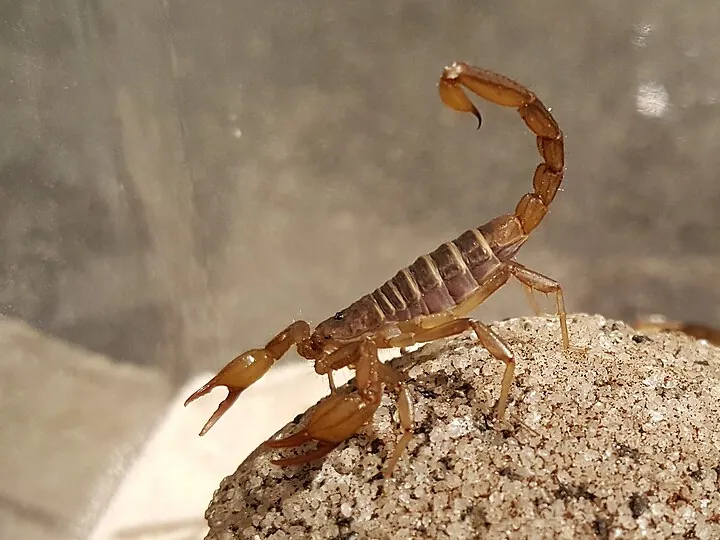
How to identify it
- Small, light brown to straw-colored scorpion
- Stout pincers
- Lives in sagebrush and grassland
Size: 1.5–2.2 in (length). Habitat: Sagebrush, grassland and rocky slopes of the interior West.
Also called northern desert scorpion.
Where it lives
- Lives here
- Rare records
- Gone
- Not here
When it is out
State by state
| State | Status | Open records | Counties |
|---|---|---|---|
| Utah | Lives here | 42 | 15 |
| Nevada | Lives here | 37 | 13 |
| California | Lives here | 33 | 8 |
| Colorado | Lives here | 28 | 5 |
| Oregon | Lives here | 23 | 6 |
| Washington | Lives here | 12 | 7 |
| Wyoming | Lives here | 8 | 4 |
| Montana | Lives here | 6 | 3 |
| Arizona | Lives here | 5 | 2 |
| Idaho | Lives here | 5 | 2 |
| Nebraska | Rare records | 5 | 1 |
States not listed have no open records and are outside the range.
Questions
Where does the northern scorpion live?
In 10 states: Arizona, California, Colorado, Idaho, Montana, Nevada, Oregon, Utah, Washington and Wyoming. Rare records also come from Nebraska.
Is the northern scorpion dangerous?
Painful, rarely serious. The scorpion of the northern states. Sting is mild.
How do you identify a northern scorpion?
Small, light brown to straw-colored scorpion. Stout pincers. Lives in sagebrush and grassland.
When is the northern scorpion most active?
Most open US records fall in May to June, August.